
Buying and collecting goods#
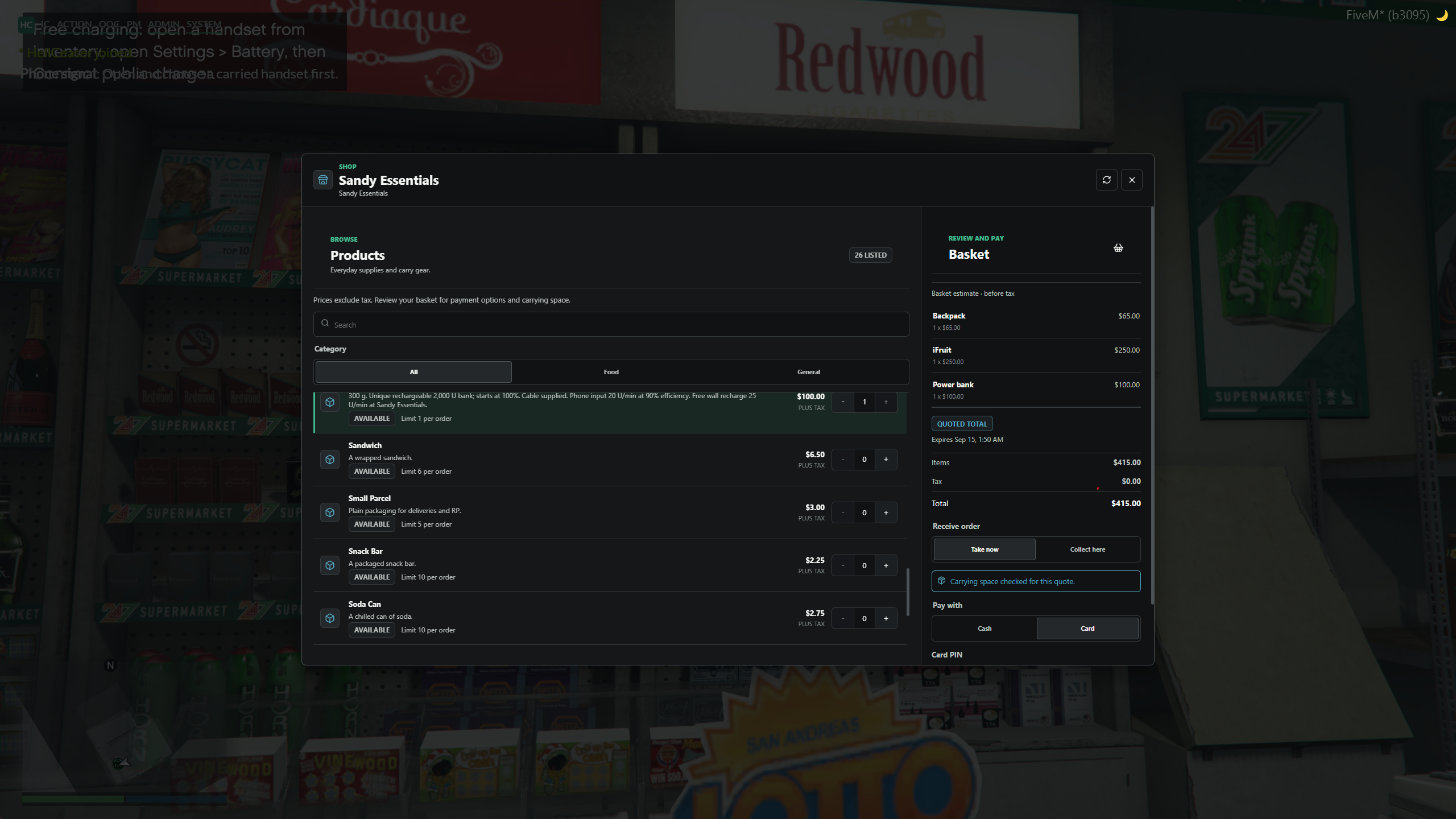
Purchases must fit your inventory. Shops that offer collection can hold paid orders for later pickup at the same counter, with a collection deadline.
Returns use the receipt and returned items to check the original purchase, subject to the shop’s return rules.
Running the counter#
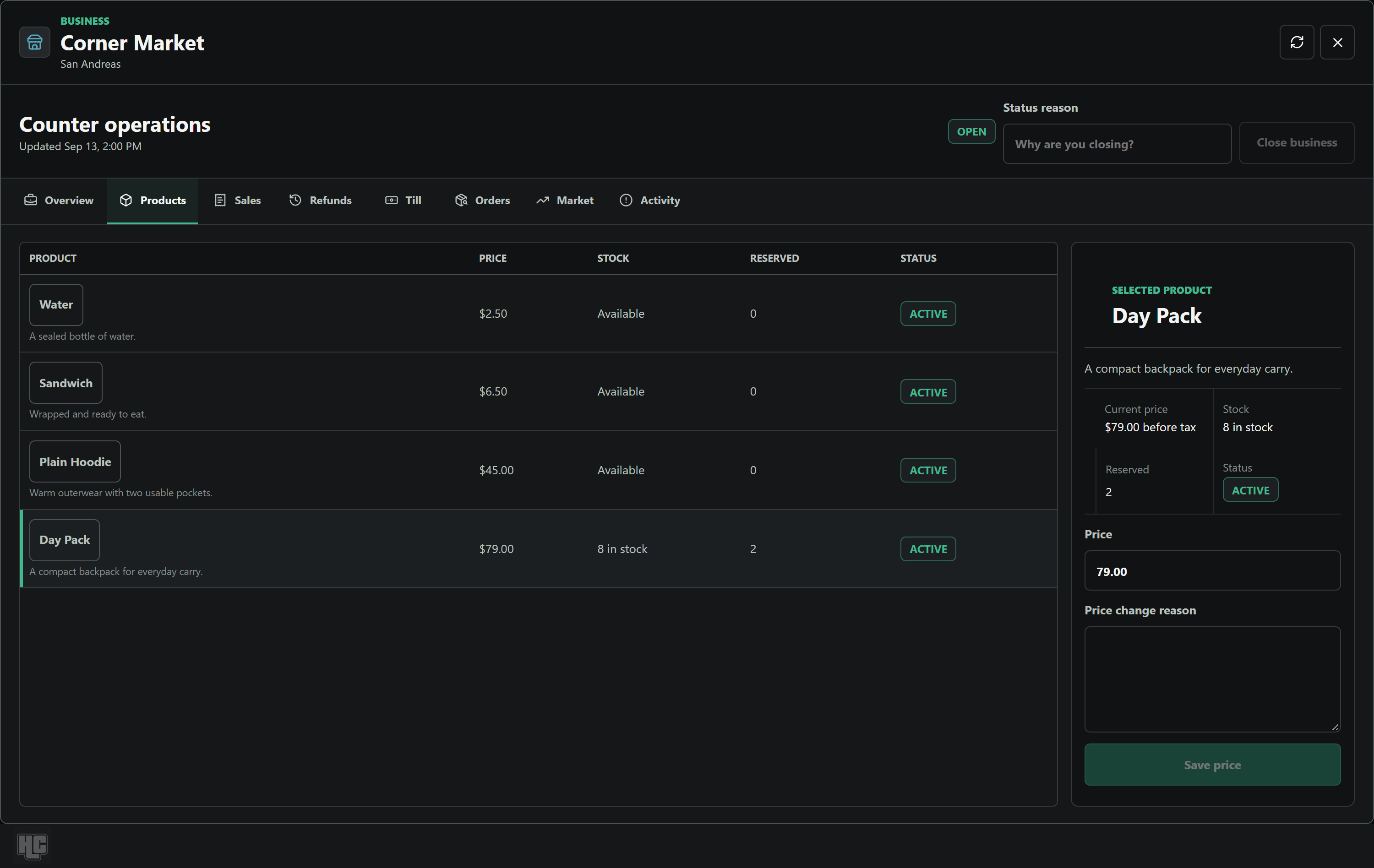
Staff permissions control access to pricing, stock orders, shop opening and closing, and refunds.
Cash sales go into the till; card sales go to the business account. Staff can add change, compare counted cash against recorded sales and bank the takings.
Ordering stock#
Staff order wholesale goods by the pack and pay from the business account. The shop can fund a delivery job to bring the goods into its stockroom.
Suppliers can offer deliveries to players first, with a timed fallback if nobody takes the job. Some shops use a separate supply system.
Delivery work →Private sales#
Nearby item offers include a quantity and asking price. Payment and goods transfer together once the buyer accepts.
Completed trades contribute to market reports once enough sales exist to compare. The reports omit buyer and seller names.