Cash and bank accounts#
Cash takes up inventory space. Card payments require your bank card and PIN. Branches and ATMs offer different services, and large cash deposits require a note explaining the source.
New characters receive starting funds. Basic support, paid jobs and business wages provide further income.
Paying and disputing bills#
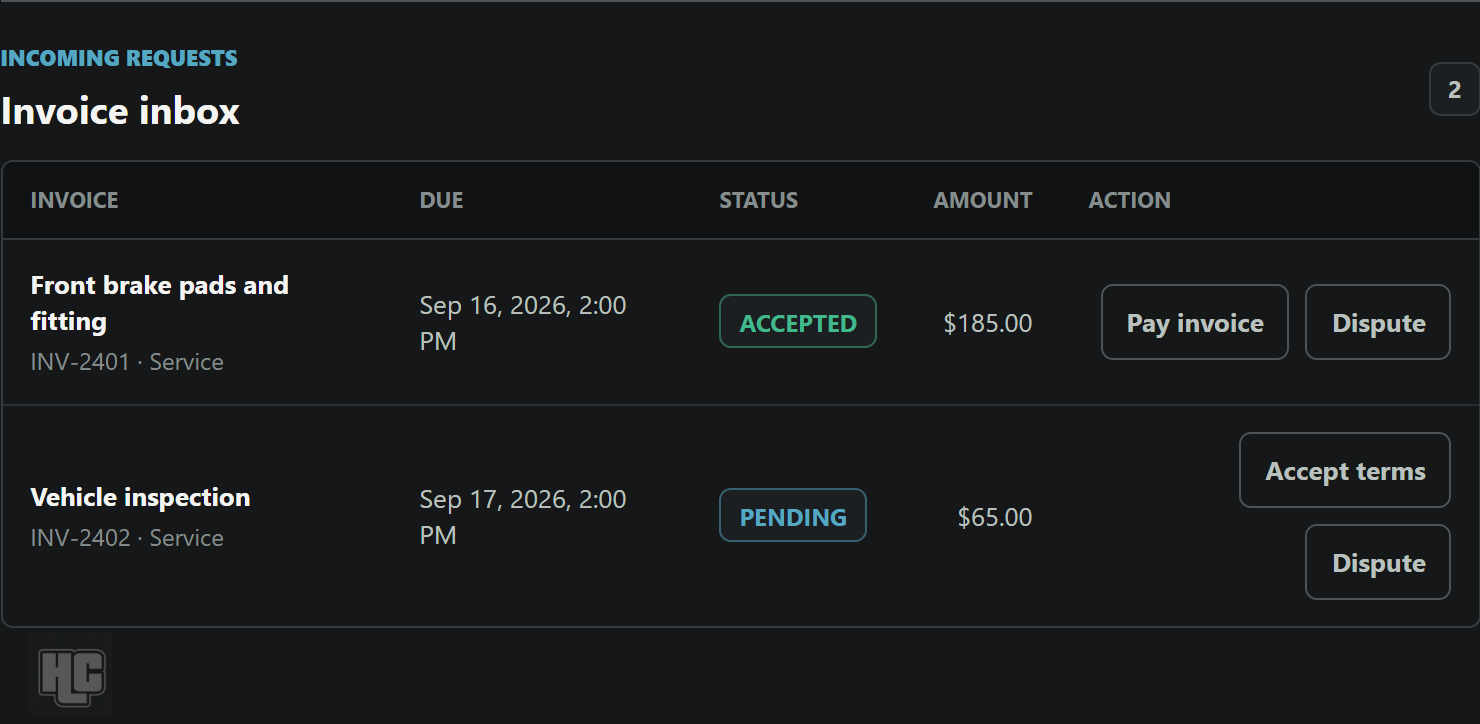
Businesses send invoices with terms you can accept or dispute. Accepting an invoice does not authorize payment; the business cannot withdraw the money from your account.
You can dispute an unpaid bill with a written reason, which stays on the invoice record.
Business accounts and wages#
Business funds stay separate from employees’ money. Card sales go into the business account, while cash sales go into the till. Staff permissions control who can handle takings, order supplies or manage wages.
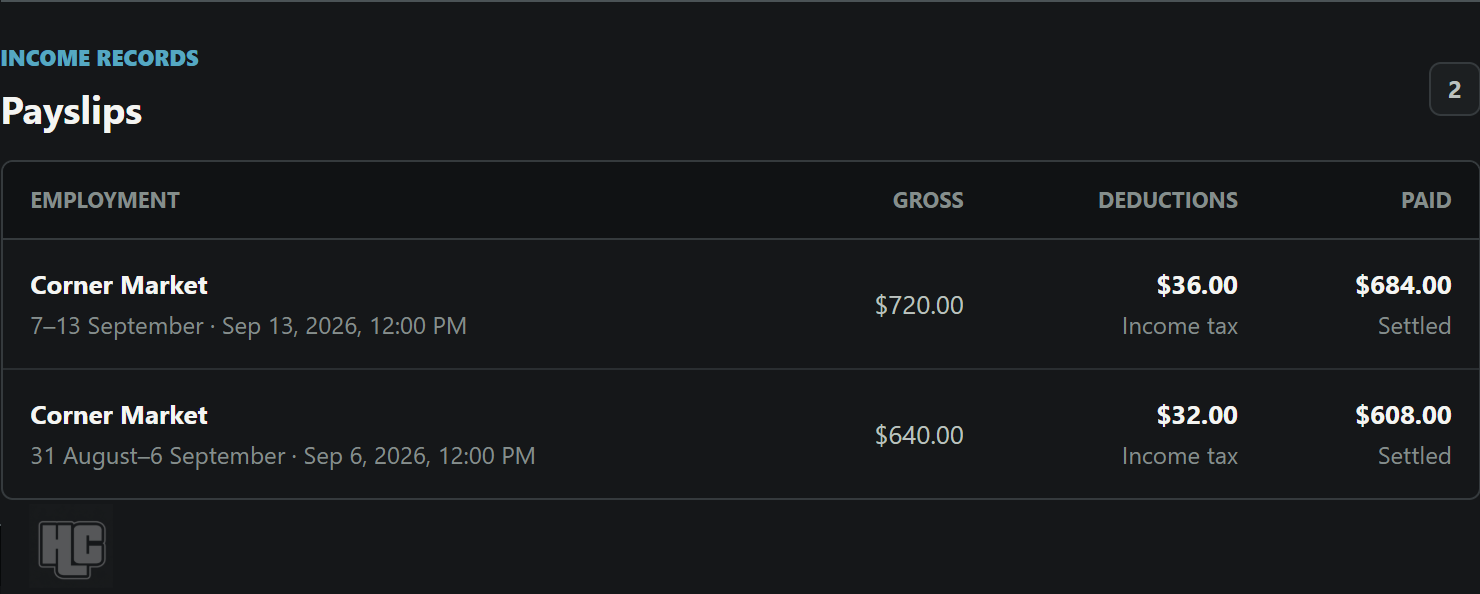
Employers pay wages from the organization’s funds, using the pay rules for each rank. Payslips record the pay period, gross pay, deductions and amount paid. Receipts and payslips include taxes on purchases and earnings.
Vehicle loans and credit#
Vehicle-loan applications take into account the down payment, vehicle value, existing loans, credit history and earnings from wages or completed jobs. Transfers between accounts do not count as income.
Loans support automatic payments, extra payments and early repayment. Paying on time builds credit history. Missed payments have a grace period before an overdue loan can enter default.
Property finance is waiting on the property system.
Comparing prices#
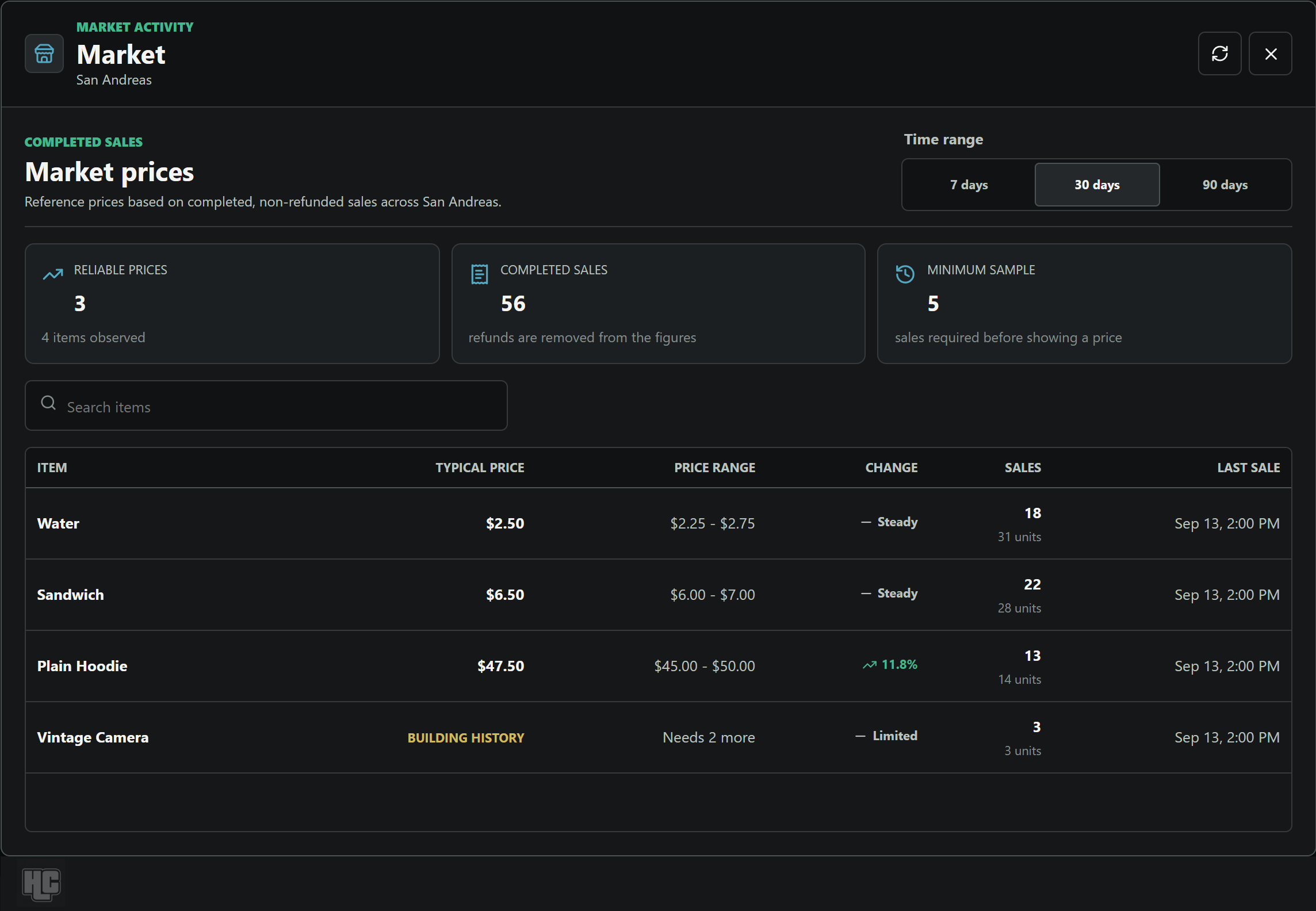
Market reports use completed sales to show price ranges and trading activity. Returns and reversed sales affect those figures. The reports leave out buyers’ and sellers’ names.
An item needs enough sales before it appears in the report. We’re still testing prices and balancing the economy around the time people spend roleplaying.